
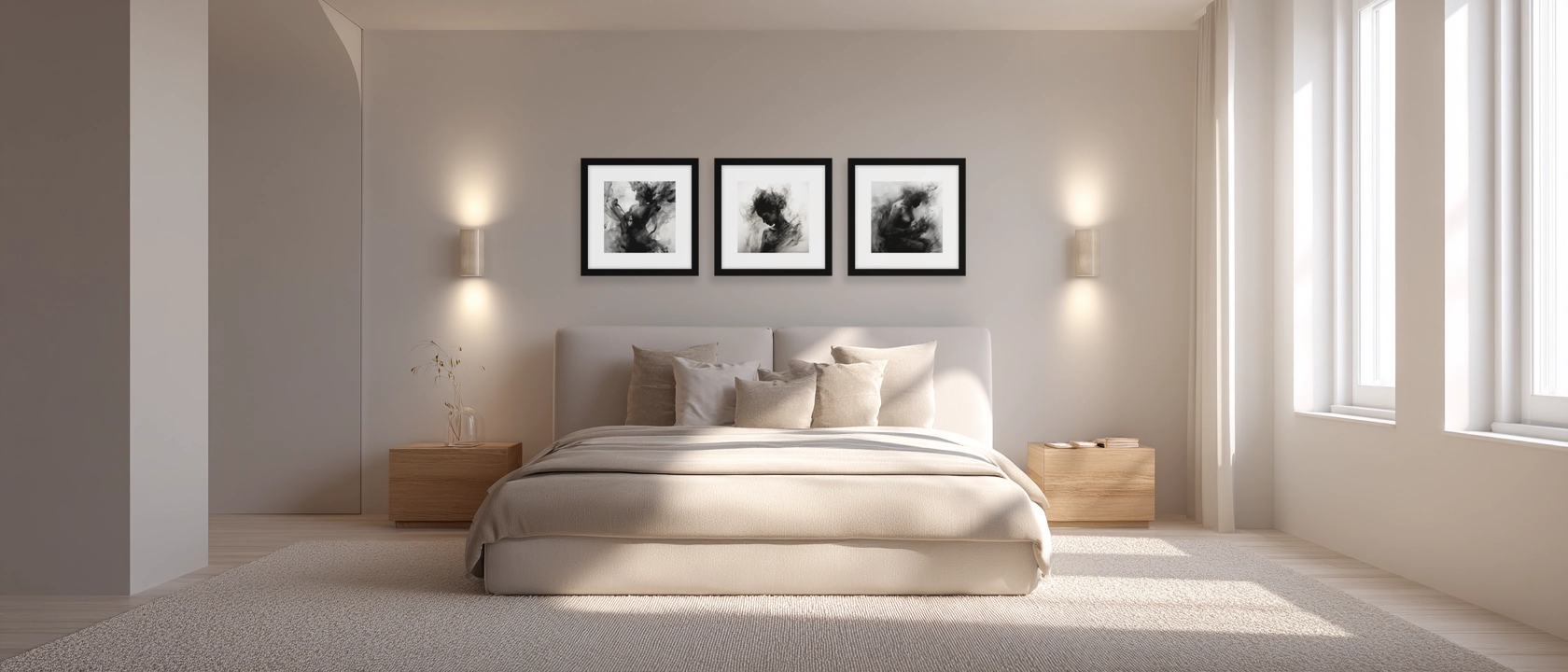
What Is Framed Art?
Framed art is any artwork (a print, photograph, illustration, or original piece) that’s presented inside a frame so it’s ready to hang and display.
The frame isn’t just decoration — it finishes the piece, helps it sit well in a room, and protects it from everyday wear.
What Does “Framed Art” Mean?
At its simplest, framed art is made up of:
- The artwork (the print/photo/original)
- A mount/mat (optional, but common — the border around the artwork)
- The frame (wood/metal/etc.)
- Glazing (glass or acrylic — also optional, but common)
A “good” framed piece looks intentional from a distance and holds up over time up close.
Why Framed Art Is Used in Homes and Interiors
Framed art tends to work well in real spaces because it:
- Looks finished (no extra work needed)
- Adds structure to a wall (especially in minimal rooms)
- Makes the artwork feel more premium
- Protects the piece from dust, knocks, and handling
If you’re trying to make a room feel “complete”, framed art is often the quickest win.
Types of Framed Art
Framed Prints
These are reproductions of artwork, typically printed on quality paper chosen for colour accuracy and durability, such as cotton-based fine art papers like Hahnemühle Photo Rag or professional matte papers like Felix Schoeller True Fibre Matte . If you want something polished without buying an original, framed prints are usually the sweet spot.
Framed Photography
Great for modern interiors. Photography often benefits from framing because it sharpens the edges and makes the piece feel deliberate rather than “just an image”.
Framed Original Artwork
One-of-one pieces (paintings, drawings, etc.). Originals often need more careful framing choices, especially around protection and preservation.
Framed Art vs Other Wall Art Options
Framed art vs canvas: canvas is more casual and texture-forward; framed art feels cleaner and more “finished”.
Framed art vs posters: posters are usually thinner paper and less durable; framed art typically uses better materials and presentation.
Framed art vs unframed prints: unframed can look great, but framing is what turns it into a true “ready-to-display” piece.
If you’re unsure: framed art is generally the safer choice for a main living space.
How Framing Affects Quality and Longevity
Framing can make a big difference to how well a piece holds up:
- Glazing helps protect against dust, moisture, and fingerprints
- Better materials reduce warping and fading over time
- Mounting keeps the artwork from touching the glass and looking “stuck”
If you’re buying something you want to keep for years, framing quality matters as much as the artwork itself.
How to Choose Framed Art for Your Space
Use this quick checklist:
- Size: go bigger than you think for feature walls. Small art disappears on large walls.
- Colour: pick one or two colours in the artwork that match the room (cushions, rug, curtains).
- Style: clean frames suit modern spaces; textured or darker frames add warmth.
- Placement: hang at eye level. If it’s above furniture, keep it visually connected (not floating too high).
If you’re building a set (2–3 pieces), keep the frame style consistent for an easy cohesive look.
Is Framed Art Right for You?
Framed art is a good fit if you want something that:
- looks complete immediately
- elevates a room without redecorating
- feels intentional and high-quality
If you prefer a more relaxed, informal look, canvas or unframed prints may suit you better — but for “finished” interiors, framed art usually wins.